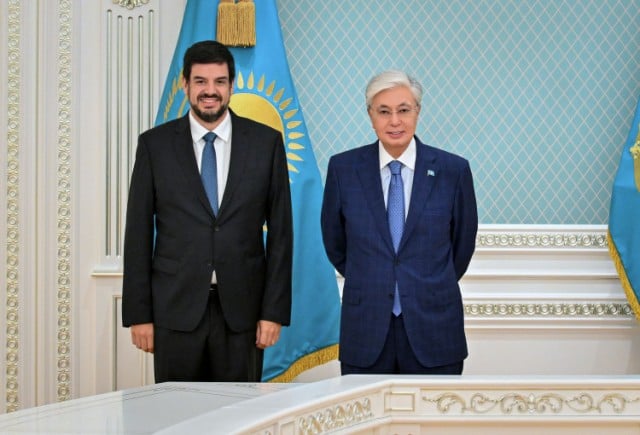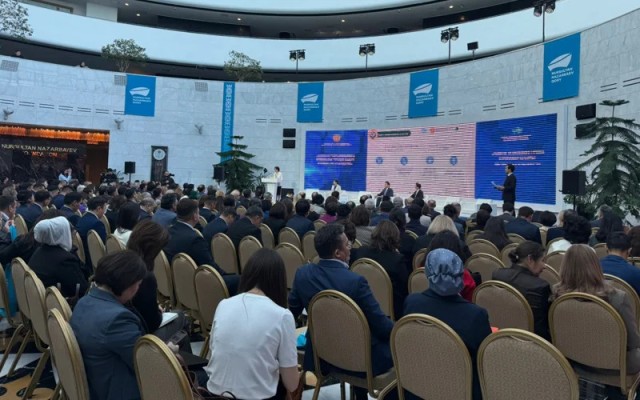



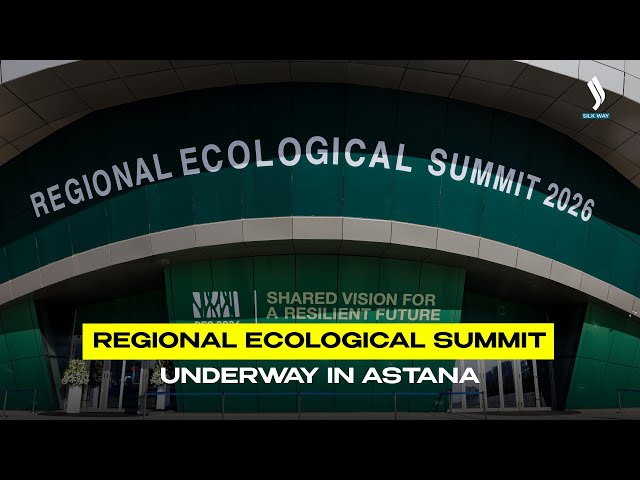
Astana is once again attracting international attention. Today, the Kazakh capital is hosting discussions on the most pressing issues, including environmental conservation, climate risk reduction, and the shared goal of protecting the planet and its future. The Regional Ecological Summit is taking place here, bringing together Heads of State from Central Asia and the Caucasus, UN Deputy Secretaries-General, heads of agencies and other international organizations, as well as scientists and experts. President Kassym-Jomart Tokayev delivered a speech at the opening of the plenary session. He emphasized that environmental cooperation should serve as a tool for unity and must not lead to divisions between states. Therefore, the global transition to environmentally friendly models should be balanced.
«In many cases, environmental agendas are drafted and shaped without considering to the full extent the development needs of different regions and countries, especially of emerging states that are still building up their economic capacities. Our common approach should be well-grounded, pragmatic, thoroughly considered to allow countries to move forward sustainably without compromising their opportunities for economic growth and progress,» Tokayev said.
Water scarcity, desertification, glacial melting, air pollution, and biodiversity loss were identified by the President of Kazakhstan as the key environmental challenges facing Central Asia and neighboring regions, which must be addressed now and through collective action. Tokayev outlined Kazakhstan’s steps in advancing environmental responsibility. In particular, the new Constitution clearly enshrines environmental protection as a fundamental principle. To date, the share of renewable energy in the country exceeds 7% and is expected to double by 2030. Kazakhstan also plans to further develop carbon-free electricity generation and strengthen measures to protect the Aral Sea and the Caspian Sea.
«So far, we restored about 36 percent of the Northern Aral Sea, improving water quality, fish stocks and enhancing living conditions. Another pressing concern for my country is the Caspian Sea. Kazakhstan has therefore initiated an Interstate program to prevent further degradation of the Caspian Sea and established Scientific Research Institute of the Caspian Sea to advance regional scientific cooperation,» Tokayev added.
Biodiversity conservation also remains one of the key priorities of
Kazakhstan’s environmental policy. As a result, saiga antelope populations and
snow leopard numbers have been restored. Additionally, more than 1.5 billion
trees have been planted across the country as part of reforestation efforts.
Alongside regional initiatives, a key priority for Kazakhstan is global
cooperation on water resources. Within the framework of the summit, the first
round of consultations will be held on the establishment of an International
Water Organization as a UN agency. Notably, this initiative was proposed by
President Tokayev last year in Ashgabat. He also emphasized the importance of
the Astana Declaration on Ecological Solidarity in Central Asia, calling it an
important step in strengthening regional cooperation.

Related Articles