


Kazakhstan plans to launch direct flights to Tokyo and New York, with the government set to complete the opening of new air services by year-end. To date, 34 international flights operate from Astana. In 2027, five more routes will be added, allowing direct flights from the Kazakh capital to London, Paris, Rome, Vienna, and Singapore. At the same time, the number of transit flights has increased fourfold over the past five years. According to the International Civil Aviation Organization, Kazakhstan ranks among the world’s top 20 countries in aviation safety. The country intends to continue its efforts. Plans are underway for a full upgrade of air navigation infrastructure and modernization of the aircraft fleet. This year, it will be expanded with nine new aircraft, three of which have already been acquired. By 2040, their number will exceed 260.
«By the end of the year, the Ministry of Transport is instructed to take measures to approve the Civil Aviation Development Master Plan through 2050. The document must include measures for the development of small and regional aviation, unmanned aerial transport, and the introduction of advanced technologies for the use and storage of new alternative fuels. The authorities of the East Kazakhstan, Mangystau, Kostanai, and Pavlodar regions are instructed to commission the airports in Katon-Karagai, Zaisan, Kenderli, and Arkalyk within the established deadlines this year, as well as complete the modernization of Pavlodar airport,» Kazakh Prime Minister Olzhas Bektenov noted.
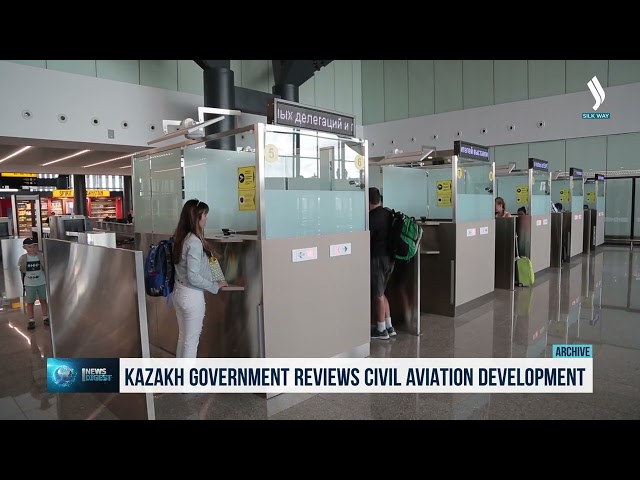
As part of the sector digitalization efforts, the Q-Gate system has been introduced at the airports of Astana and Almaty, reducing passenger processing time from three minutes to 50 seconds. This year, 16 more similar terminals will be installed in four cities across the country. On domestic flights between Astana and Shymkent, biometric passenger identification will also be launched in pilot mode. Digital technologies are being integrated into cargo transportation. To date, 17 airports in Kazakhstan and 56 air carriers have been connected to the unified e-Freight platform. Artificial intelligence will accelerate air cargo processing time from one day to one hour.
«The next step toward achieving digitalization goals is
the recognition of electronic air waybills as fully valid documents within the
customs declaration system. This would create the necessary conditions for the
transition to fully paperless and automated air cargo customs clearance,
accelerate international logistics, and enhance the country’s competitiveness
as a regional aviation and transit hub,» TransInfoTech CEO Malik
Berdigaliyev said.

Related Articles