



Kazakhstan and the European Union are paying close
attention to the development of the Middle Corridor. Representatives of
European and international organizations, as well as transport companies from
our country, placed the main emphasis on infrastructure modernization,
digitalization, increased capacity, and integration with the European network.
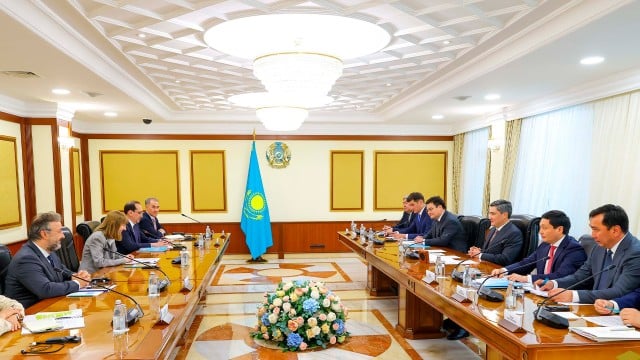
Participants of the meeting in Brussels stressed that the Trans-Caspian
Corridor is a key project for Kazakhstan and the region. About 80% of its land
section passes through our country. In 2025, around five million tonnes of
cargo were transported along the route. In the first quarter of this year, 125
container trains were dispatched, and in April, a record of six trains from
China in a single day was set.
«Kazakhstan has a central position in this Middle Corridor.
Kazakhstan is a very important economy in Central Asia, so the export of goods,
but also the import is very important for both of the economies. I think that
actually the Middle Corridor can play a role there to be an alternative to the
present Strait of Hormuz problems,» noted Godfried Smit, Secretary General of the European Shippers’
Council.
Digitalization is also advancing: Kazakhstan, Azerbaijan,
and Georgia have joined forces to coordinate transportation and online cargo
tracking. In addition, by the end of the year, our country and Azerbaijan plan
to lay around 380 kilometers of fiber-optic communication lines along the
bottom of the Caspian Sea. The project will create a powerful digital corridor
between Europe and Asia.
«Kazakhstan indeed with China started to reactivate the transcontinental transport links. And now there is a north route which is working well,» said Pierre Borgoltz, Member of the Advisory Council, FERRMED Association.
Notably, the Middle Corridor is being increasingly integrated
into the European Global Gateway strategy. By the end of the year, between 600
and 1,000 container trains are planned to be operated along the route. This
will strengthen Kazakhstan’s role as a key transit and logistics hub of
Eurasia.

Related Articles