



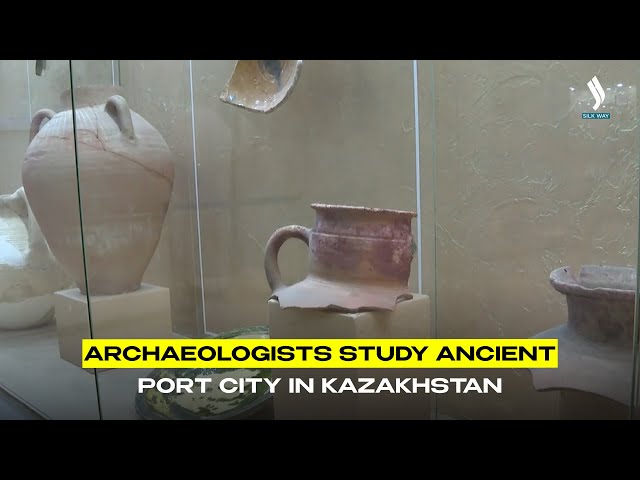
Valuable artifacts, including coins, seals, and ceramic items, have been discovered at the ancient settlement of Karakabak in Kazakhstan. All of the artifacts indicate historical links with Byzantium, Persia, India, Rome, and China. During the excavations, traces of an ancient port were also uncovered. Archaeologists suggest that the settlement may have been a major maritime trade and craft center on the eastern coast of the Caspian Sea.
«Around 150 coins have already been found at Karakabak. These include Parthia, Khwarezm, Sogdiana, China, and now Byzantium. They reflect a broad network of trade routes that intersected in Mangystau,» said archaeologist Andrey Astafyev.
The history of the ancient settlement dates back around two thousand years. Scholars identify Karakabak with the city-state of Aspabota, which was marked on a map by the Greek scholar Claudius Ptolemy in the 2nd century AD. Archaeologists say the site once served as a major maritime and overland hub along the Silk Road.
«The artifacts discovered suggest the existence of a major trade route predating the Silk Road. At that time, the Caspian Sea was a crucial hub for both maritime and overland trade, which led to the emergence of a major urban center here. We have also found written sources confirming the existence of this city,» said Akan Ongaruly, Director General of the Margulan Institute of Archaeology.
Plans are underway to establish a scientific and archaeological center in
the Karakabak area, create an open-air museum, develop modern tourism
infrastructure, and launch dedicated tour routes to the site.

Related Articles