

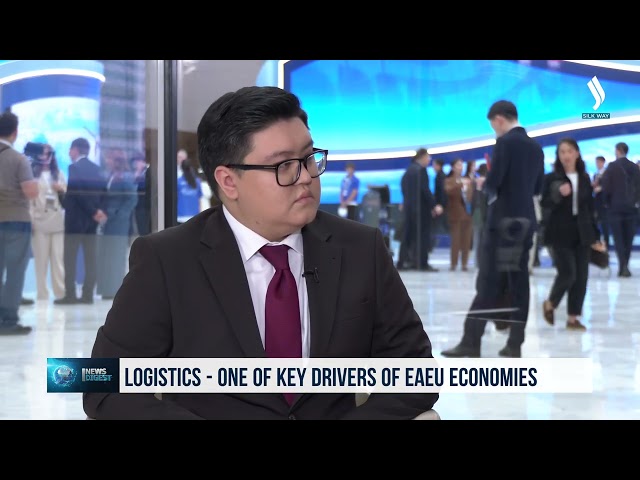
Logistics is one of the key drivers of economic
cooperation within the EAEU. Since the beginning of the year alone, cargo
transportation within the Union has exceeded 2.5 billion tonnes. Under these
conditions, the seamless movement of goods through border crossing points is of
particular importance. Digital solutions are expected to accelerate this
process. As an example, Sergey Shklyaev, Minister in charge of Customs
Cooperation of the Eurasian Economic Commission, highlighted Kazakhstan. The
KEDEN information system operates in the country, automating and integrating
customs procedures on a single window principle. Russia will also introduce its
own mechanism starting June 1. The SPOT system for monitoring supplies from
EAEU member states will enable advance electronic verification of cargo data
and facilitate the movement of goods for compliant businesses within the common
market.
«Two sources of information will be compared: the consignment
note and the information contained in the QR code. No inspections or additional
forms of customs control will be applied. First, the necessary software products have been
developed. Second, the conditions to enable online scanning of these QR codes
directly at border crossing points, including all road checkpoints. These
standard digital solutions should be
studied, shared, adopted as a basis and incorporated into the regulatory framework,» noted Sergey Shkliaev, Minister in charge of Customs
Cooperation of the EEC.
Against the backdrop of geopolitical instability in the Middle East, the importance of overland and multimodal transport corridors bypassing traditional maritime routes has increased. Kazakhstan can offer one of the secure routes for international trade - the Middle Corridor. This will ultimately have a positive impact on the economies of the EAEU member states by creating opportunities to diversify supplies and increase trade volumes, notes Alisher Bazarbayev, Deputy Director of the World Economy Research Center. Many countries are interested in ensuring that the Trans-Caspian International Transport Route operates more efficiently and continues to develop further.
«The ports of Kuryk and Aktau, despite handling
significant volumes, are still insufficient in terms of capacity, and their
potential needs to be further expanded. Second, there are the transaction costs
of multimodality, that is, changes in modes of transport, customs procedures,
and so on. In this regard, substantial work is being carried out jointly with
international organizations to standardize and simplify these routes. We hope
that this will be resolved, and thus the Middle Corridor will be a strong
alternative route,» said Alisher
Bazarbayev, Deputy Director of the Center for World Economy Research, Economic Research
Institute.

Related Articles