

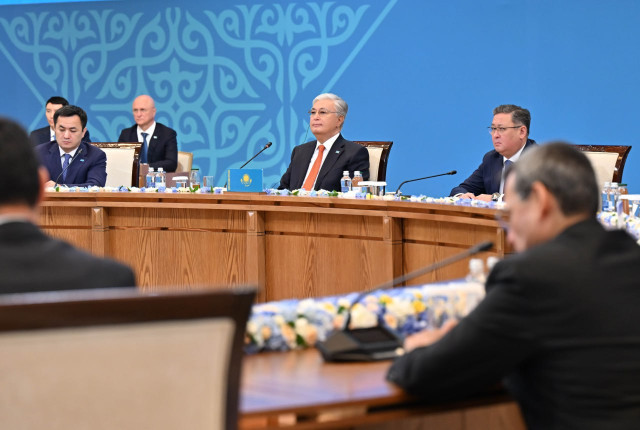
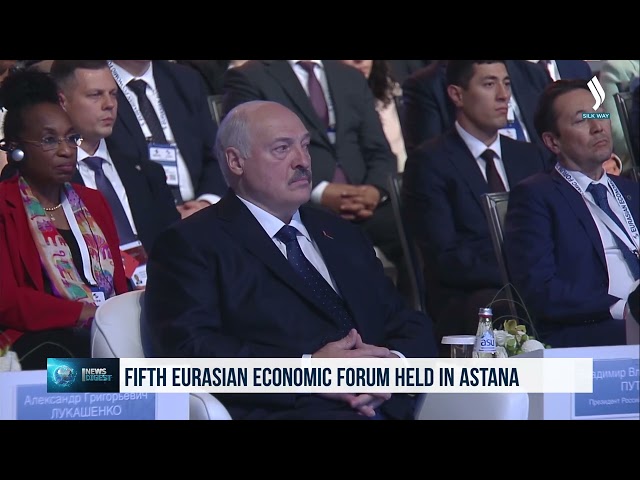
Artificial intelligence and digital transformation in the EAEU countries were the key topics at the plenary session of the fifth Eurasian Economic Forum in Astana. Among the distinguished guests were the heads of state of the union member countries, including Russia, the Kyrgyz Republic, and Belarus, as well as official delegations from Armenia, Cuba, Vietnam, Mongolia, and the Eurasian Economic Commission. Kazakh President Kassym-Jomart Tokayev opened the forum. He emphasized that amid unprecedented geopolitical turbulence, the countries of the integration association have managed to ensure the stable development of their economies thanks to coordinated actions. The strategically important task now is to further strengthen the potential of the EAEU, especially given the unpredictable situation on the global market, with traditional economic challenges overlapping a massive digital shift. The application of AI will transform the technological order and the structure of employment.
«According to the IMF, in the coming years, as artificial intelligence technologies are introduced, around 40% of jobs on the global labor market could be affected. Naturally, hundreds of millions of people around the world will need retraining. Therefore, during its chairmanship in the bodies of the Eurasian Economic Union, Kazakhstan proposed the practical use of artificial intelligence technologies in order to ensure the ‘four freedoms’ within the union to strengthen the competitiveness of its member states,» President Tokayev noted.
Kassym-Jomart Tokayev highlighted Kazakhstan’s
initiatives in the field of digital technologies. In particular, 2026 has been
declared the Year of Artificial Intelligence and Digital Development. The
country has established a dedicated ministry and the AI Development Council with
the participation of leading international experts. Most importantly, the new
Constitution enshrines citizens’ right to the protection of personal data.
Kazakhstan is also developing its technological infrastructure: two
supercomputers based on NVIDIA technologies have been launched, while the Data
Center Valley project is currently underway. To strengthen human capital
development, international schools have been established, and AI is being
integrated into the secondary education system.
«Kazakhstan is open to partnership and cooperation with EAEU member states to ensure high-quality, accelerated digital transformation. In my view, it is crucial to intensify the introduction of new technologies, primarily artificial intelligence, into the sphere of trade and logistics. To speed up customs procedures, it is important to strengthen the interaction of national digital systems. Mutual recognition of digital signatures will help significantly reduce business costs and increase trade volumes within the EAEU,» President Tokayev added.
The
potential of AI can be used not only in logistics but also in expanding
industrial cooperation and in the agro-industrial sector, President Tokayev
noted. The Head of State
emphasized that the active and comprehensive application of new technologies
will become a factor of dynamic economic growth for states and an instrument of
interconnectedness and cooperation. Notably, the EAEU member states, as well as
observer states, adopted a joint statement on the responsible development of
artificial intelligence. The main purpose of the document is to fix common
approaches to the digitalization of the economy and ensure the safe
introduction of AI.

Related Articles