



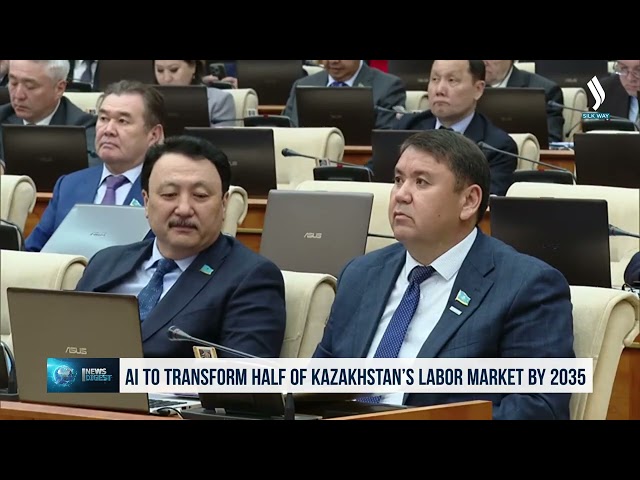
Artificial intelligence and digital technologies are
influencing the labor market in Kazakhstan. According to the relevant ministry,
by 2035 more than 560 professions in the country will be transformed under the
impact of AI, while 14 will disappear completely. At the same time, new
specialties are emerging that combine industry-specific knowledge with AI.
Experts believe that demand for these professions will continue to grow in the
coming years. The employment structure is transforming faster than the education
system can adapt. Employers are already experiencing a shortage of personnel in
advanced manufacturing, digital technologies, clean energy, defense, and
creative industries. The Ministry of Science and Higher Education conducted a
survey at more than 73,000 enterprises. Based on the results, in-demand
professions were identified, highlighting the economy’s acute need for technical
specialists. At the same time, sectors such as livestock farming and metallurgy
remain critically important.
«The accelerated adoption of artificial intelligence across key sectors of the economy requires the higher education system to train specialists capable of working in a digital and automated environment. To support this, access to higher education is being significantly expanded, along with increased state support. In particular, over the past five years, funding for the sector has risen from 246 billion to 472 billion tenge. The number of state educational grants is also increasing annually, reaching 77,000 this year,» noted Daniya Yespayeva, Deputy Chair of the Mazhilis, the Lower House of the Kazakh Parliament.
Meanwhile, Kazakhstan will introduce a digital
National University Ranking, which will become a key tool for assessing the performance of higher education institutions. The launch of the
project was announced by Minister of Science and Higher Education Sayasat
Nurbek during a government session in the Mazhilis. Based on the ranking, state
funding will be allocated, and the higher a university ranks, the more support
it will receive. In addition, the results will serve as a criterion for
applicants when choosing a university. The system is expected to begin
operating as early as this year.

Related Articles