



Next year, Kazakhstan plans to launch three Earth
observation satellites. They will be equipped with more advanced optical and
radar imaging systems. This will improve the accuracy of monitoring across
agriculture, natural resources, the environment, and emergency situations. In
orbit, the new domestically assembled satellites will replace the current ones previously developed in cooperation with European partners. Work on their integration and
assembly is currently underway. Testing is set to begin in mid-year, with
preparations for the satellites expected to be completed by the end of 2026.
«The global trend shows that space
monitoring is being
increasingly implemented in many countries. It is in high
demand, and its effectiveness is evident, as many states are creating their own
satellite constellations,» noted Kaiyrzhan Kozhayev, Chairman of the Board,
Kazakhstan Gharysh Sapary national company.
Currently, five Kazakh satellites are in orbit, including
three for communications and two for monitoring. One of them, KazEOSat-2, is being prepared for
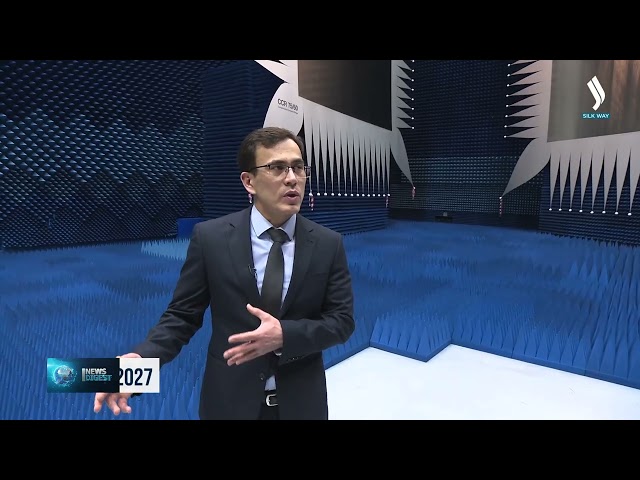
decommissioning. Spacecraft testing is conducted in Astana at a dedicated test site, where conditions
closely simulate the space environment.
«The distance from the Earth to
geostationary orbit is about
36,000–39,000 kilometers. Here, signal simulation is performed. The chamber
contains two reflectors: one hyperbolic and the other parabolic. There is also
an illuminator and a
positioner where the test object
is placed,» said Bauyrzhan Almatov, Head of Ghalam.
In the longer term, Kazakhstan intends to expand its orbital constellation. Three more satellites are set to be launched in 2029-2030, bringing the total number to six. According to experts, this will ensure regular data updates and enhance system resilience. Kazakhstan is also developing a near-lunar telescope project launched in 2024 as part of an international agreement. Work is currently underway on its concept, including technical specifications and orbital parameters. By 2030, Kazakhstan aims to establish an international astronomical hub, strengthening the country’s position in global space science.

Related Articles