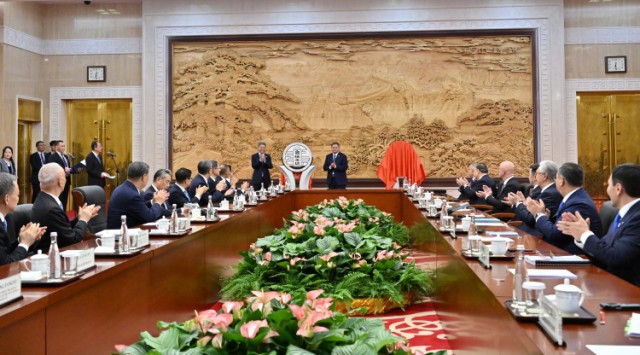


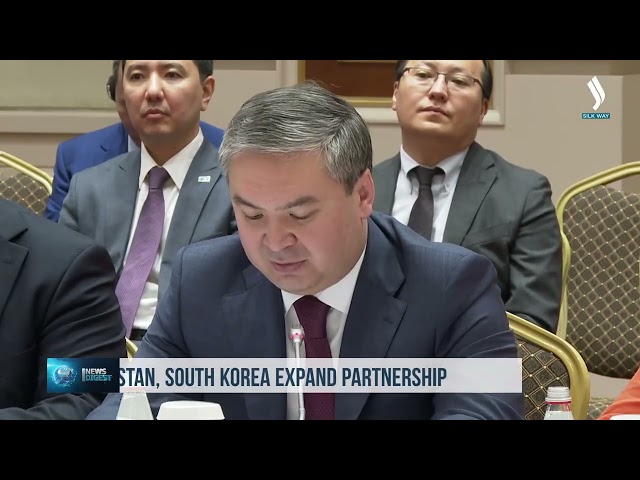
Kazakhstan and South Korea are elevating their cooperation to a new level. One of the key areas of focus will be the development of Alatau City. The two sides are preparing an intergovernmental agreement on this initiative. The document will define the main areas of cooperation and establish a roadmap for the project. The Korean corporation KIND is being considered a strategic partner and may take part in developing smart engineering systems, modern transport infrastructure, residential districts, and master plans. The implementation of the project was discussed in the capital at the 11th meeting of the Joint Commission on Trade and Economic Cooperation between the two countries. Notably, a constitutional law establishing a special legal regime for Alatau City was recently adopted. The law provides special conditions for investors, simplified administrative procedures, and modern business support mechanisms.
«At Kazakhstan’s initiative, work is underway on an intergovernmental agreement for the development of Alatau City. As far as I know, work on the agreement has already begun on both sides. This document will help formalize shared approaches and cooperation priorities, while also establishing a roadmap for future action. I believe both sides will review the agreement promptly, and we expect to be ready to sign it during President Kassym-Jomart Tokayev’s visit to South Korea later this year,» said Yersaiyn Nagaspayev, Kazakh Minister of Industry and Construction.
Currently, the two countries are implementing 46 joint projects worth around $4 billion. The partnership is developing across industry, energy, construction, transport, and high-tech sectors. Particular attention is being paid to the development of the Trans-Caspian transport route. Kazakhstan has invited Korean companies to participate in the modernization of infrastructure along the Middle Corridor. Notably, South Korea is one of Kazakhstan’s key economic partners. Over the past 10 years, Korean investment has reached $8 billion, while bilateral trade exceeded $3 billion last year.
«In addition to
traditional areas such as resource cooperation and industrial projects,
collaboration has expanded into critical minerals, technological cooperation,
and new city development. I believe it is worth stepping up work on the
comprehensive economic partnership agreement (CEPA). This document could serve
as a foundation for strengthening economic cooperation and enhancing the
resilience of supply chains between the two countries,» said
Kim Jung-Kwan, South Korean Minister of
Trade, Industry and
Resources.

Related Articles