



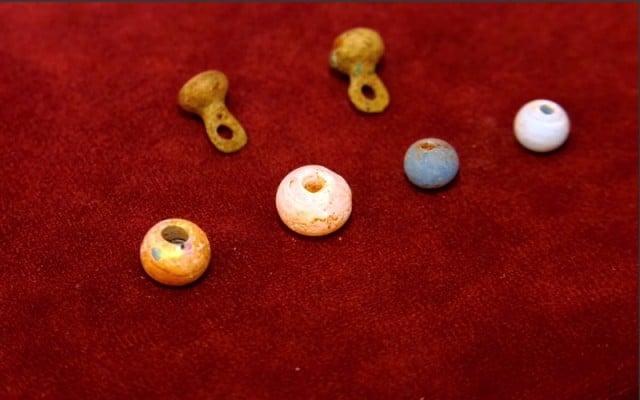
Archaeologists have discovered new Golden Horde-era artifacts in northern Kazakhstan. At the Zhantai tract, researchers found fragments of fired bricks consistent with the «Golden Horde standard». The bricks were used in the construction of palaces, mosques, and mausoleums. They also uncovered remains of medieval masonry and burials. Preliminary findings suggest that a 14th- to 15th-century mausoleum once stood at the site, built in honor of a member of the steppe nobility. Among the finds were metal ornaments, imported beads, and a cowrie shell from the Indian Ocean. Experts believe the shell confirms the existence of trade routes linking the Great Steppe with South Asia.
«First,
we conducted X-ray fluorescence analysis of the metal objects and artifacts and
found that they are made of complex high-lead tin bronzes, which points to the
advanced development of metallurgy in the Irtysh region. The analysis of the
bead collection also revealed that all of them were imported, further
confirming that the local population maintained far-reaching economic and
cultural ties during the Golden Horde period,» said
Yelena Trusheva, head of
the Experimental
Archaeology Laboratory
at the Institute of
Archaeological Research.

Related Articles