


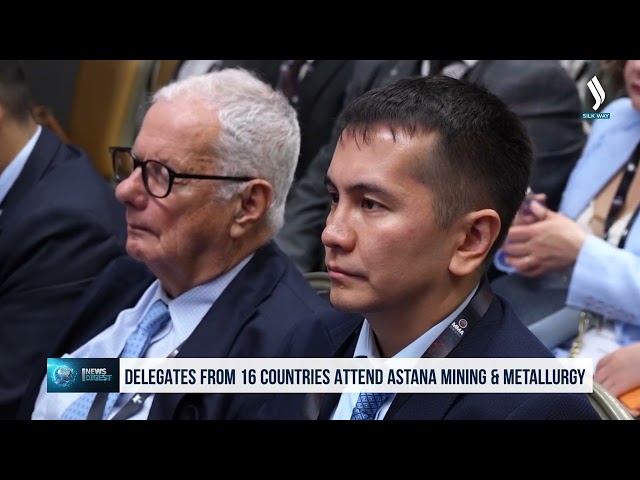
The mining and metallurgical complex remains one of the key drivers of Kazakhstan’s industrial development. The country is focusing not only on the development of mineral deposits, but also on establishing modern, high value-added production facilities. These priorities were at the center of the international forum Astana Mining & Metallurgy, which brought together 1,500 delegates from 16 countries in the capital, including Belgium, the United Kingdom, the European Union, Canada, China, the UAE, Saudi Arabia, the United States, and South Korea. Representatives of government agencies, business, and leading global companies discussed the development of deep-processing projects, the production of goods for high-tech industries, and the introduction of digital and AI solutions in the industrial sector. According to Kazakh Prime Minister Olzhas Bektenov, the sector’s priorities include the development of critical minerals, the expansion of new metallurgical production, and the attraction of strategic investors. He noted that Kazakhstan is consistently strengthening its investment climate, developing industrial infrastructure, and creating conditions for high value-added production to support large-scale projects. Particular attention is also being paid to geological exploration. In the next two years, $470 million will be allocated for this purpose. Geological mapping has already begun across the country, and as a result, the surveyed area of subsoil resources will exceed 2 million square kilometers.
«The new Constitution provides a solid foundation for
economic growth and the protection of private property rights and upholds the
norms and principles of international law. In this regard, the implementation
of major projects in subsoil use, metallurgy and downstream processing requires
not only substantial investment and long investment cycles, but also strong
institutions, predictable regulation and business confidence,» said Bektenov.

Related Articles