

Astana has once again
become a center of attraction for young talents and innovative ideas. The Kazakh capital is hosting ALEM TECH FEST 2026, the largest
festival in Central Asia. This major event has brought together more than 5,000
school students from Kazakhstan, the Kyrgyz Republic, Uzbekistan,
Turkmenistan, Estonia, Vietnam, and Hong Kong. Over the course of three days,
participants of the tech forum will showcase their developments in artificial
intelligence, drones, and robotics.
«We are holding such a championship for the sixth time. Teams were selected from September to January through 88 qualifying championships. The best and strongest teams have come here to compete for a spot in the world’s largest championships. The biggest championship will take place in April in Houston, and we will select the top 25 teams to go there. This year’s theme is archaeology, and all teams are tackling challenges related to this field,» said ALEM TECH FEST organizer Assylbek Myrzakhmet.
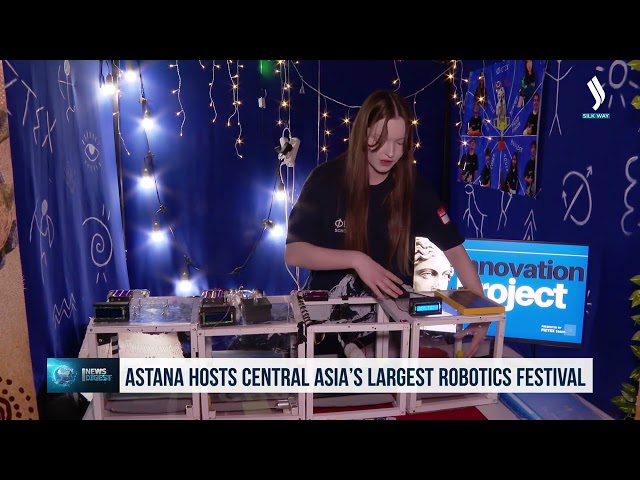
One such problem, according to a team from Almaty, is the manual cleaning of artifacts with brushes and trowels, which can damage historical treasures. Preserving these materials will now be easier thanks to a conveyor-based robotic system. According to the young inventors, the AI-powered automated system scans items on the belt, identifies contamination, and moves them for processing. The innovative development has already garnered interest and will be implemented in Kazakhstan for the first time in Central Asia.
«It consists of four
modules that can be replaced, removed, or combined. The first module is
artifact analysis: an AI-powered camera and various sensors scan the artifact
and determine its size, density, and fragility. After that, the cleaning
process begins. We consulted many scientists and archaeologists about our
project. While at NU, we presented it to archaeologists with over 20 years of field
experience, as well as researchers from Harvard. They confirmed that our
project would help reduce the time needed to clean artifacts and allow them to
explore larger areas within the same timeframe without compromising quality. We
have also already agreed to test our project in practice this summer,» noted team member Yekaterina Leontyeva.

Related Articles